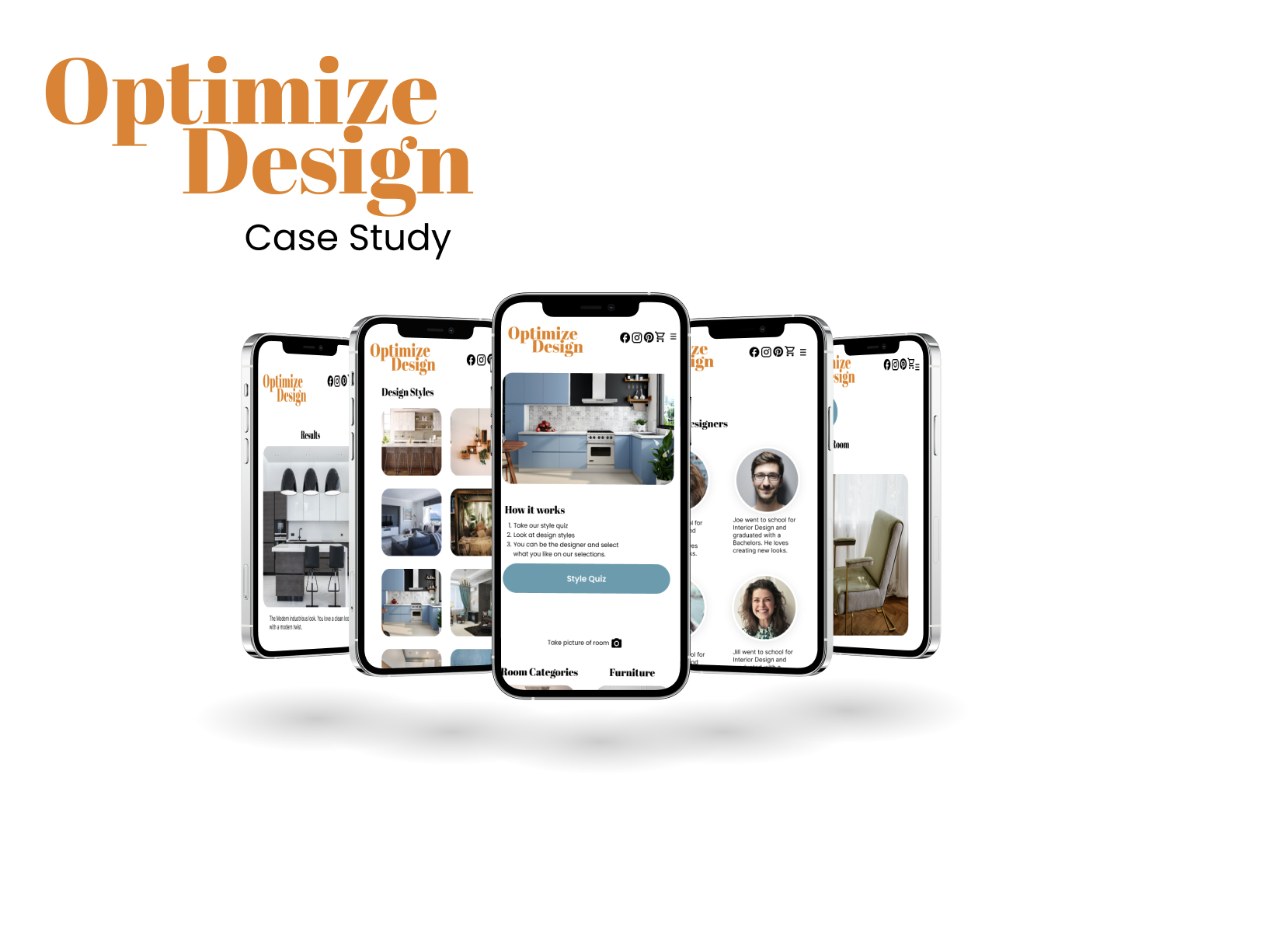
The Product
A small interior design business that likes style and catering to our community. They offer a wide range of options and an excellent team of designers.
Tools: Figma
My Role: UX designer from conception to delivery
Conducting interviews, paper and digital wireframing, low and high-fidelity prototyping, conducting usability studies, accounting for accessibility, and iterating on designs.
Responsibilities
The Goal
Creating a user-friendly app that is easier for all users to be able to get ideas for interior design.
User Painpoints
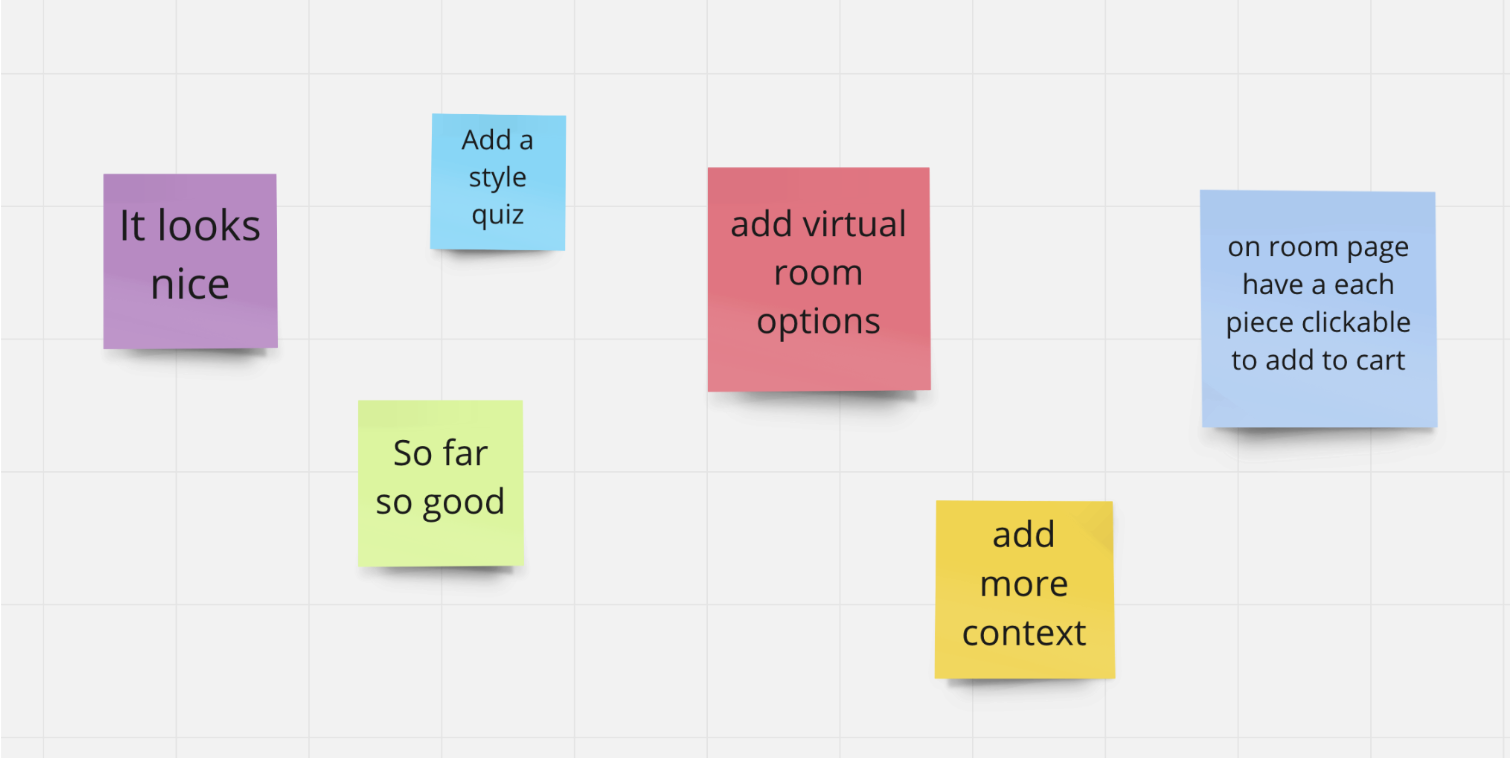
Needed a Style Quiz
Needed to add where they are located
Need to add more options when it come to design options
Ideation
User Research
I conducted interviews and created empathy maps to understand the users I’m
designing for and their needs. A primary user group identified through research
was adults who want to get Interior design advice with little effort.
This user group confirmed initial assumptions about Optimize Design clients, but research
also revealed that time was not the only factor limiting users from being able to select designs.
Other user problems included obligations, interests, or challenges that make it
difficult to use the design service.
Personas
Susie is a working woman who needs an interior design service because she lacks the expertise or time to design it herself.
Frank is a retired man who needs an interior design service because he wants a change since his wife has passed.
Prototype
Lo-Fi Prototype
Accessibility Considerations
Used the A11y tool to help with focused order
Provided access to users who are colorblind by making sure they can still see the icons and text through a vision simulator.
Used an application like lookalise to translate to another language
Impact
The app makes users feel like Optimize Design meets their needs on allowing options for interior design.
Takeaways
While designing the Optimize Design app, I learned that the first ideas for the app are only the beginning of the process. Usability studies and peer feedback influenced each iteration of the app’s designs.