Project Overview
The Project
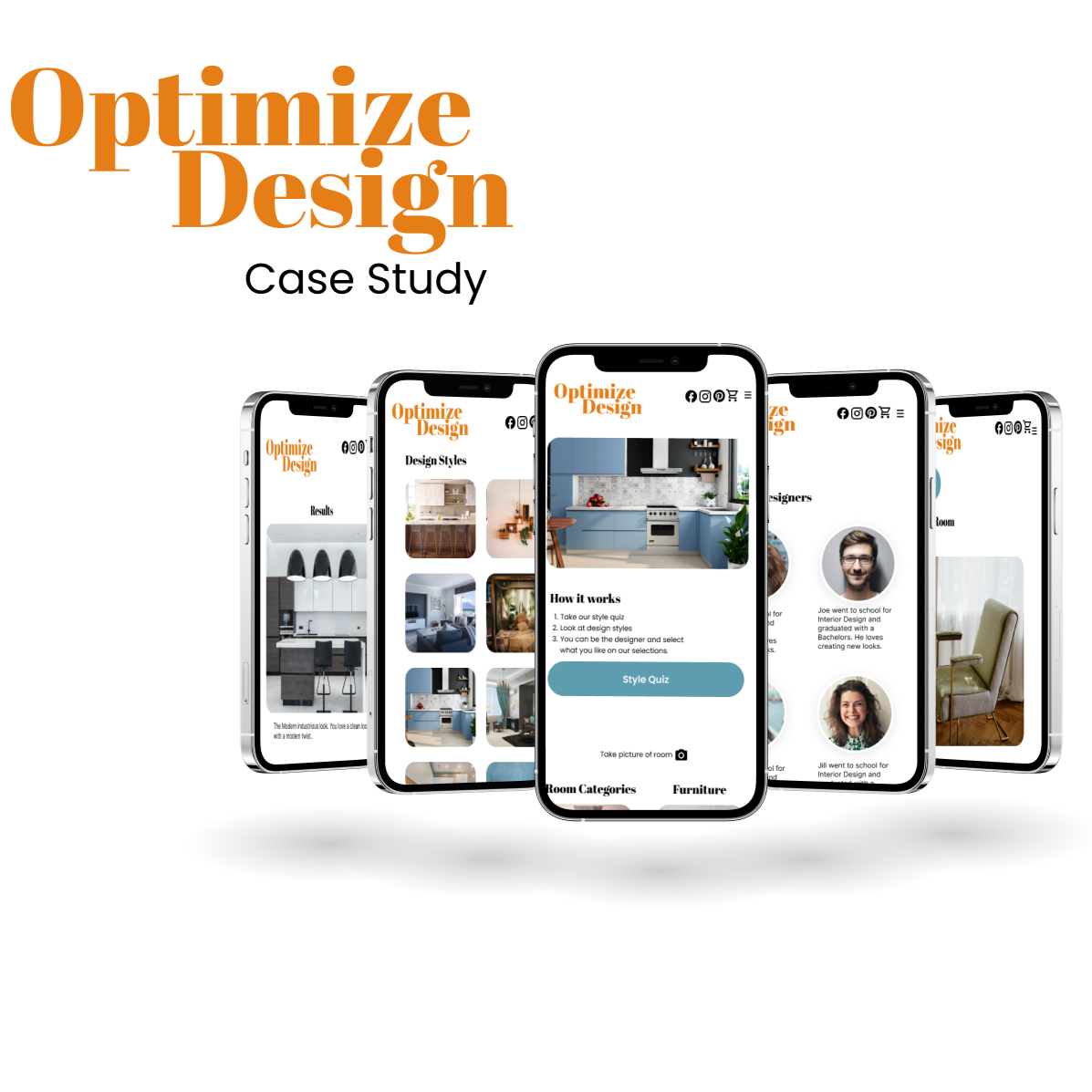
Optimize Design is a conceptual mobile application that bridges the gap between interior design inspiration and actionable purchasing decisions. The app combines a personalized style quiz, room visualization tools, and curated furniture shopping to create a seamless interior design experience.
My Role: UX designer
Many people struggle to visualize how furniture will look in their space and feel overwhelmed by endless shopping options without clear direction on their personal style.
The Challenge
The Goal
A mobile-first platform that uses a style quiz and room photo analysis to provide personalized furniture recommendations, making interior design accessible and actionable.
Impact Goal
Increase online bookings by 75% in first quarter
Target Audience
Adults from ages 25 to 45
Timeline
6 weeks from researcher to final prototype
Research & Discovery
Conducted 5 in-depth interviews with recent furniture shoppers and renters.
Distributed an online survey to respondents about shopping habits.
3 rounds of testing with prototypes at different fidelity levels
Analyzed 8 competitors including Wayfair, Houzz, and Design Within Reach
User Reasearch Goal
73% of users don't know their design style or how to articulate their preferences, leading to decision paralysis.
Users struggle to imagine how furniture will look in their actual space, resulting in costly mistakes and returns.
Too many options across multiple retailers create decision fatigue, with users spending 8+ hours researching per purchase.
Key Findings
Personas
Based on research, I created two primary personas representing our target users.
Sarah
28 years old, First-time homeowner, Marketing Manager
Goals
Create a cohesive, stylish living space
Stay within a $5,000 budget
Make confident purchasing decisions
Pain Points
Doesn't know where to start with design
Afraid of making expensive mistakes
Overwhelmed by too many options online
"I love browsing Pinterest, but I have no idea how to actually make my apartment look like those pictures without spending a fortune."
David
35 years old, Renter, Busy Software Engineer
Goals
Quickly find pieces that match his style
Purchase items that can move with him
Shop efficiently during limited free time
Pain Points
No time to visit multiple stores
Difficulty visualizing items in his space
Analysis paralysis from too many choices
"I need to furnish my apartment fast, but I don't want it to look like I just grabbed the first thing I saw at IKEA."
Design Process
I followed a user-centered design approach with continuous iteration.
Ideation
Conducted brainstorming sessions to identify core features. Created "How Might We" statements and prioritized features using MoSCoW method.
Wireframing
Created low-fidelity wireframes for mobile-first experience
Prototype
Built high-fidelity interactive prototype in Figma
Conducted 3 rounds of usability testing with 12 participants. Iterated based on feedback to improve task completion rates.
Testing
Final Design
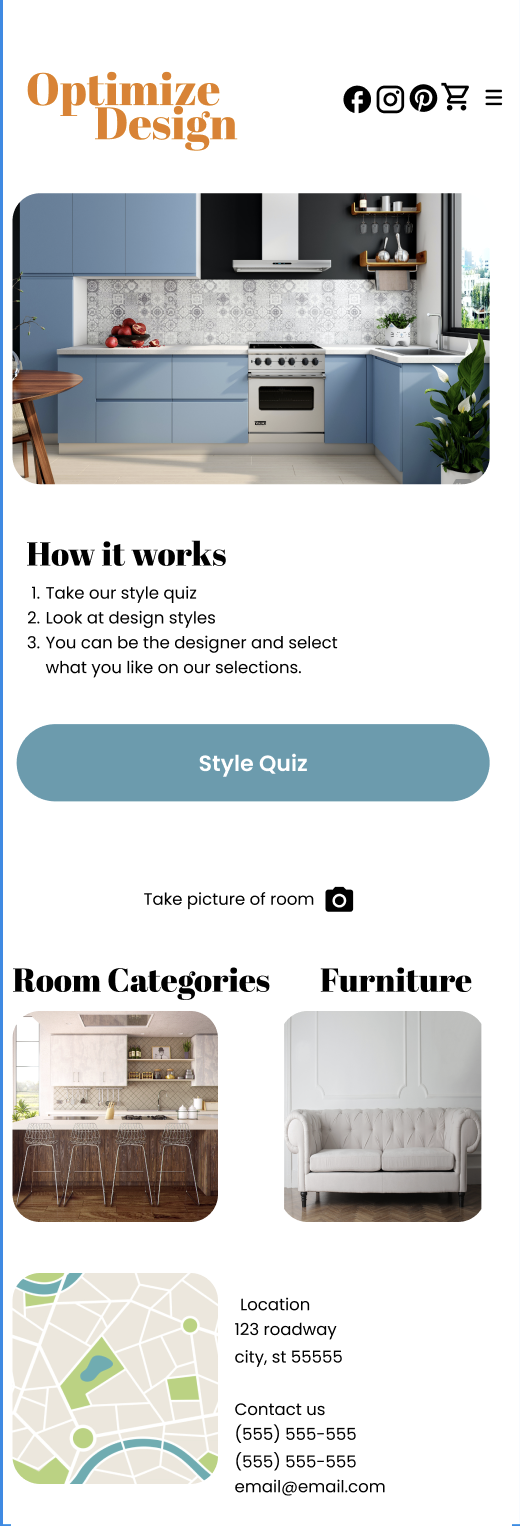
The home screen introduces users to the app's core value proposition: personalized interior design made easy. The style quiz is prominently featured as the primary entry point to the personalized experience.
Home Screen
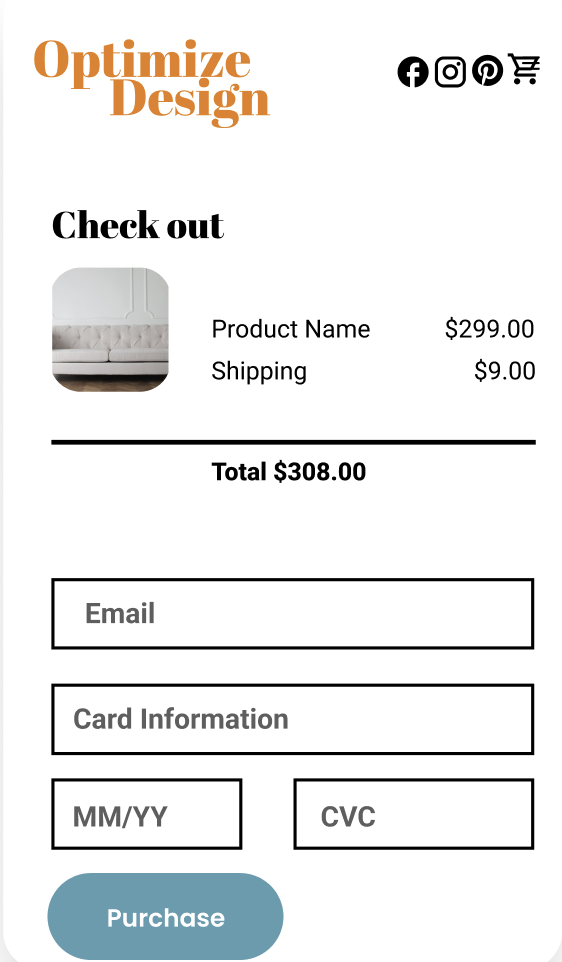
A streamlined checkout flow reduces friction and cart abandonment. Users can see their order summary at a glance and complete purchase in a few steps.
Checkout Experience
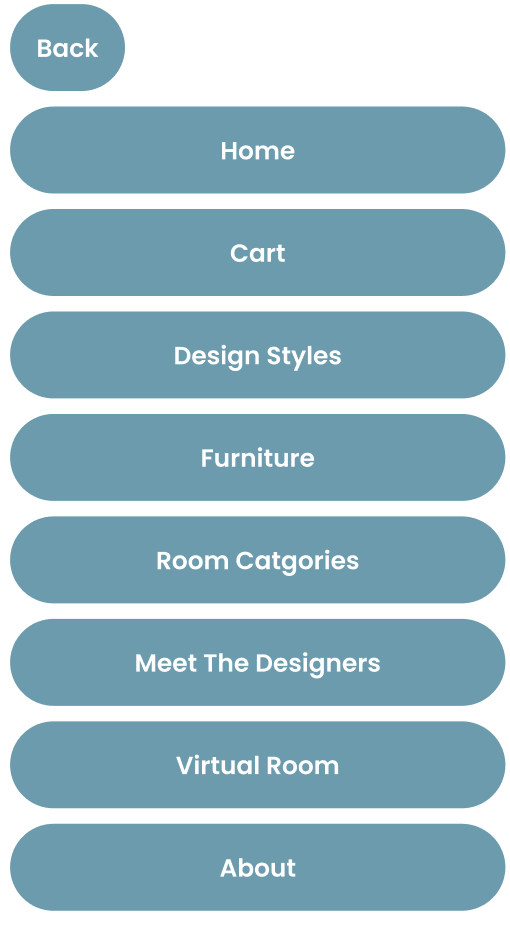
A simple, accessible navigation menu provides clear access to all major sections. The full-screen menu design ensures touch targets are appropriately sized for mobile.
Navigation System
Results and Impact
The redesigned platform launched in Q4 2025 and exceeded all KPI targets within 3 months.
Task completion rate
Quiz completion rate
8.5/10
100%
Average ease of use score
User satisfaction score
4.6/5
92%
"The quiz was actually fun! I loved how it showed me styles I never would have considered but totally match my vibe."
-Usability Test Participant, Age 29
"Being able to see the furniture in my actual room is genius. I wish every furniture app had this feature."
-Usability Test Participant, Age 34
Key Takeaways
What Worked
Personalization significantly increases engagement
Visual tools reduce purchase anxiety
Mobile-first is essential for furniture shopping
Simple onboarding drives quiz completion
Future Improvments
Implement full AR room visualization
Add social sharing and collaboration features
Expand furniture catalog partnerships
Develop designer consultation booking
Creating this end-to-end experience helped me develop skills in user research synthesis, interaction design, and design systems. The iterative testing process, particularly around the style quiz algorithm and AR visualization flow, demonstrated how small UX improvements can significantly impact user confidence and satisfaction. This project showcases my ability to identify market opportunities and design solutions that address real user pain points.
Personal Reflection
I'd love to share more details about the research process, design decisions, or technical implementation.
Want to discuss this project?